Planted in a Village, Growing into Business: The Entrepreneurs Gonerby YFC Didn't Know It Was Making
Gonerby YFC was not designed to be a business incubator. Nobody sat down and wrote a strategy document about nurturing entrepreneurial talent. There are no pitch decks, no mentorship programmes with corporate sponsors, no glossy brochures about rural enterprise pathways.
And yet, if you look at what's been happening among the club's alumni over the past several years, something unmistakable is going on. Small businesses are emerging. Social enterprises are taking shape. People who grew up attending YFC evenings in a Lincolnshire village are now running things — market stalls, land management consultancies, community food projects, craft businesses — with a confidence and competence that seems to trace back, at least in part, to a shared origin.
So what exactly is Gonerby YFC doing, even accidentally, to produce this?
The Invisible Curriculum
Every YFC member will tell you they learned practical skills at Gonerby. Stock judging, public speaking, cooking, countryside crafts — the programme is varied and hands-on in ways that formal education rarely matches. But the skills that seem to matter most for the entrepreneurs emerging from the club's alumni are less visible than that.
They're things like: understanding how to manage limited resources. Knowing how to coordinate a team of volunteers who don't have to be there. Learning to present yourself and your ideas under pressure. Experiencing failure in a low-stakes environment — a lost competition, a fundraiser that underperformed — and understanding that it isn't fatal.
These are, almost precisely, the competencies that business advisers spend years trying to teach adult entrepreneurs. Gonerby's members appear to absorb them as a byproduct of just showing up.
"I didn't realise until I was doing it that running a business is basically the same as organising a YFC event," says one former member who now runs a rural food enterprise in Lincolnshire. "You've got a budget, you've got people, you've got a deadline, and you've got to make something happen. I'd done that dozens of times before I ever called myself a businessperson."
The Network Nobody Quantifies
One of the most underrated assets of any tight-knit community organisation is its network — and Gonerby YFC's is more valuable than it might appear on the surface.
The club connects young people across a wide rural catchment, many of them from farming families with land, equipment, supplier relationships, and deep local knowledge. It links members to county federations, national competitions, and a broader agricultural community that stretches well beyond Lincolnshire. And it creates bonds between people that persist long after the membership lapses.
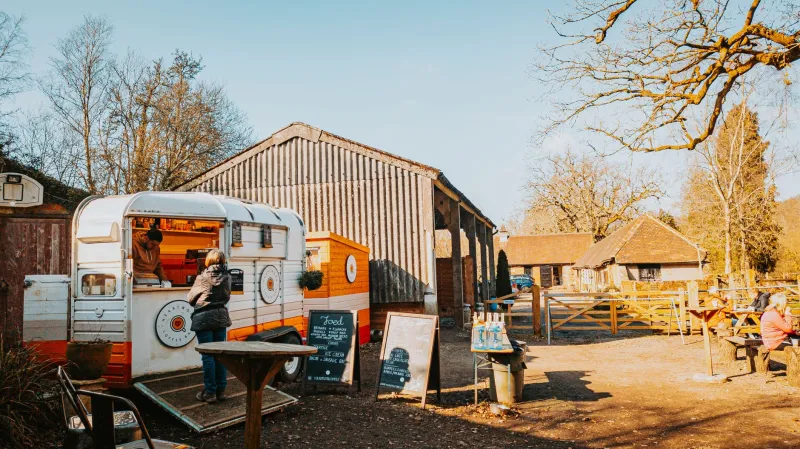
For someone starting a rural business, that network is not decorative. It's functional. It means knowing who to call when you need a field for a pop-up event, or a vehicle for a delivery, or simply an honest opinion from someone who understands the land.
"I've never had to pay for a business directory," says one former member who launched a rural heritage craft business after leaving the club. "My YFC contacts have introduced me to suppliers, customers, and collaborators. That's not nothing — that's everything when you're starting from scratch."
Competition as a Business School
Gonerby's competition calendar — county shows, public speaking events, stock judging, cookery competitions — is often framed in terms of sporting achievement and personal development. But it also functions, quietly, as a remarkably effective business training ground.
Competing forces members to set goals, prepare systematically, manage nerves, and perform under scrutiny. It teaches them to accept external judgement — judges don't score on effort, they score on results — and to use that feedback constructively. It also introduces a healthy relationship with competitive pressure that many people never develop until much later in their professional lives.
Several alumni describe their first experience of pitching to a client or supplier as feeling surprisingly familiar. The mechanics — prepare thoroughly, communicate clearly, handle questions without flinching — were ones they'd already rehearsed in a different context.
"The public speaking competitions terrified me," admits one former member who now delivers workshops to rural businesses. "But I got up and did it, and I didn't die, and that was genuinely useful information about myself. I've called on that memory in much scarier situations since."
The Social Enterprise Thread
Not all of the ventures emerging from Gonerby's alumni are purely commercial. A notable thread runs through several of them: a sense of responsibility to the rural community that shaped them.
This isn't surprising. YFC membership is, at its core, a lesson in community contribution. Members organise events for others, fundraise for local causes, and participate in activities that have no direct personal benefit beyond the satisfaction of being useful. That orientation — towards community as well as commerce — seems to carry forward.
One alumna has launched a project connecting urban schools with working farms in Lincolnshire, driven partly by a conviction that the rural knowledge she gained at Gonerby shouldn't remain inaccessible to young people who grew up in towns. Another has built a small enterprise around traditional hedgerow products — preserves, botanical preparations — that explicitly aims to keep old countryside knowledge alive and economically viable.
These aren't businesses that are simply monetising a hobby. They're expressions of values that were, in part, formed at a village YFC.
What This Means for Rural Organisations
Gonerby YFC isn't trying to be a business accelerator. Its primary purpose is what it's always been: providing a community, a programme, and a sense of belonging for rural young people in Lincolnshire.
But the entrepreneurial output is real, and it raises interesting questions for anyone thinking about how rural communities sustain themselves economically. If a volunteer-run youth club can, as a side effect of its normal activities, produce people who go on to start businesses rooted in rural values and rural networks — that's not incidental. That's a model.
The lesson isn't complicated. Give young people genuine responsibility. Let them compete and fail and try again. Connect them to a community that cares about where it comes from. And then step back.
The rest, it seems, takes care of itself.