Three O'Clock and Counting: The Gonerby Members Living Inside Lambing Season
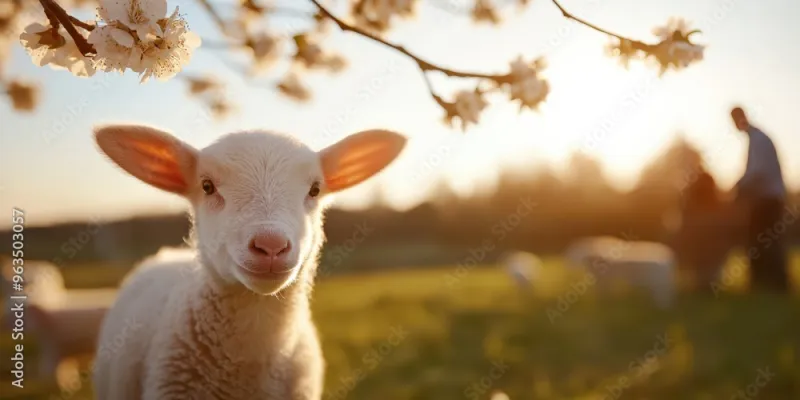
Photo: lambing season farmer young person barn newborn lamb night, via as1.ftcdn.net
Three O'Clock and Counting: The Gonerby Members Living Inside Lambing Season
There's a particular kind of exhaustion that only comes around once a year. It settles somewhere behind your eyes around day three, turns your legs to concrete by day five, and yet — somehow — it never quite convinces you to stay in bed when the alarm goes off at 2:45am. For Gonerby YFC members who work through lambing season, that exhaustion is practically a badge of honour.
This is not a story about Instagram-worthy lambs in flower crowns. This is the real thing — raw, unglamorous, and utterly unforgettable.
The First Night Always Catches You Out
"I thought I knew what to expect," says Megan, 17, who helped out on a farm near Grantham for the second year running last spring. "I'd read about it, watched videos, talked to older members. Then I walked into the barn at midnight and there were twelve ewes in various stages of labour and the farmer needed me to check on a ewe in the corner who'd gone quiet. Nothing prepares you for the actual moment."
That moment — the first lamb of your first proper lambing shift — is something Gonerby members describe with an almost religious reverence. There's blood and there's noise and there's a creature that didn't exist ten minutes ago suddenly demanding to stand up. It's biology at its most blunt, and it changes you.
Older members remember their own firsts with the kind of clarity usually reserved for wedding days. Tom, now 23 and studying agricultural management at Harper Adams, can describe the exact layout of the barn where he pulled his first lamb at age 16. "It was a big single, back legs presenting. The farmer talked me through it. I was shaking. The lamb was fine. I cried a bit on the drive home and told nobody about that for about three years."
 Photo: Harper Adams, via c8.alamy.com
The Hours Nobody Photographs
The trouble with lambing season — if you can call it trouble — is that the hard bits are just as formative as the triumphant ones. Perhaps more so.
Losses happen. They happen to the most experienced farmers, in the best-equipped barns, with every precaution taken. For a young person encountering this reality for the first time, it can feel enormous.
Jess, 19, lost her first lamb during her second season. A small twin, born underweight, that simply didn't have enough fight in it despite hours of tube feeding, heat lamps, and the kind of willing it to live that only someone who's been awake for thirty hours straight can manage.
"Nobody told me how to feel about that," she says. "Not in a bad way — there wasn't a script. The farmer just said, 'That one wasn't going to make it regardless. You did everything right.' And somehow that was the most grown-up thing anyone had ever said to me."
It's in those moments — the quiet ones, the disappointing ones — that lambing season does its deepest work on a young person's character. Resilience isn't built in the victories. It's built in the losses that you absorb, process, and get up from the next morning.
The 4am Brotherhood (and Sisterhood)
Ask any Gonerby YFC member who's done a proper lambing stint what they remember most fondly, and the answer is almost never a specific lamb. It's the people.
There's something about shared sleep deprivation that strips away every social pretence. At four in the morning, over a flask of tea that's been stewing since midnight, you talk to people differently. Conversations happen in lambing sheds that would never happen in a school corridor or a pub.
"Me and Danny hadn't really spoken much despite being in YFC together for two years," says Callum, 20. "We did three nights together on the same farm during lambing. By the end of it he was one of my closest mates. That's just what it does to you."
This is the Gonerby YFC experience in miniature — community forged under pressure, friendships that stick precisely because they were tested at three o'clock on a Tuesday morning in February.
What the Classroom Can't Teach
Schools are brilliant at many things. They are not, by and large, brilliant at teaching you what to do when a ewe rejects her lamb, when hypothermia sets in faster than expected, or when you need to make a judgement call at 4am with no senior support available.
Lambing season teaches all of those things and more. Decision-making under pressure. Animal welfare instincts that develop through repetition and care. The ability to communicate clearly when you're exhausted and stressed. The confidence to back your own judgement.
For many Gonerby members, it's the first time they've ever been genuinely needed — not just helpful, but necessary. That feeling is transformative in ways that are hard to articulate but easy to see in the people who come out the other side.
Farmers who take on YFC members during lambing season are almost universally positive about the experience. "They come in nervous and they leave capable," says one Lincolnshire farmer who has hosted Gonerby members for several years running. "Every single one of them. The change in confidence over ten days is remarkable."
The Part Nobody Would Trade
And then, somewhere around day seven or eight, something shifts. The exhaustion is still there — it doesn't go anywhere — but you stop fighting it. You find your rhythm. You know which ewe is likely to need checking first, which lamb is feeding well, which one needs another hour under the lamp.
You become, quietly and without fanfare, competent.
Megan, who started this story shaking in a midnight barn, finished her lambing stint this year with fourteen healthy lambs under her unofficial watch. She's already signed up for next season.
"People ask me why I'd do it again — the no sleep, the cold, the worry. I can never really explain it properly. You just have to do it once to understand."
That's lambing season. That's Gonerby YFC. And not a single member would trade one bleary-eyed, straw-covered, heart-in-mouth night of it.