The 5AM Training Ground Most Athletes Never See
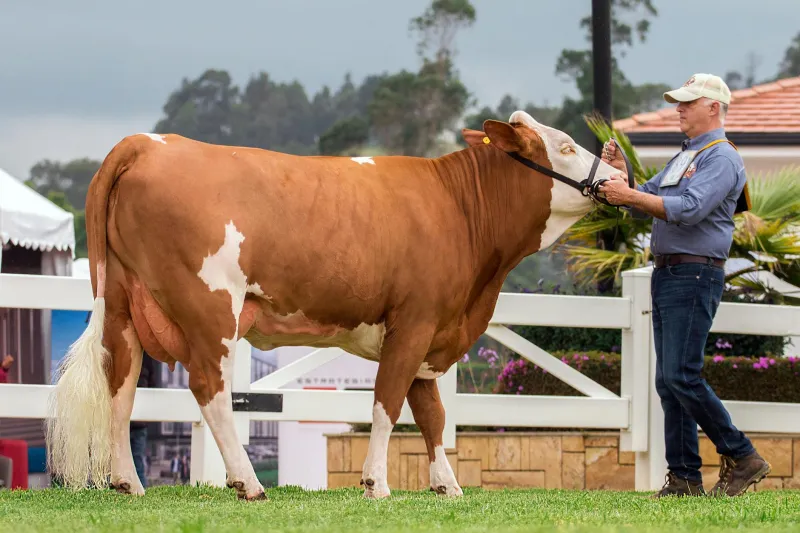
Whilst most teenagers are still buried under their duvets, seventeen-year-old Emma Richardson is already knee-deep in the cattle shed, preparing her Limousin heifer for the day ahead. The clock reads 5:15 AM, and this isn't unusual - it's Tuesday.
"People think showing cattle is just about making them look pretty," Emma laughs, adjusting the halter with practised ease. "They don't realise it's one of the most physically and mentally demanding activities you can do. And it's made me a better athlete than any gym ever could."
Emma isn't alone in this revelation. Across Gonerby YFC, a pattern is emerging that's catching the attention of county sports coaches: the young farmers who spend their weekends in show rings are consistently outperforming their urban counterparts on athletics tracks, football pitches, and netball courts.
The Invisible Gymnasium
The connection between livestock handling and athletic prowess isn't immediately obvious, but speak to any YFC member who competes in both arenas, and the parallels become crystal clear.
"When you're in that show ring, you've got about thirty seconds to make an impression on the judge," explains nineteen-year-old Jack Thornton, who recently claimed both the Lincolnshire Young Handler Championship and broke the county record for 400m hurdles. "Your animal can sense every bit of tension in your body. If you're nervous, they're nervous. If you're not focused, they're not focused. It's taught me pressure management that most athletes never experience."
The physical demands are equally rigorous. Managing a 600kg bull requires core strength that would make most personal trainers weep. The constant micro-adjustments needed to position an animal correctly develop proprioception - spatial awareness - that translates into superior balance and coordination on the sports field.
"I've never seen anything like it," admits Sarah Mitchell, athletics coach at Lincoln College. "These YFC kids come to training with this incredible body awareness. They know exactly where they are in space, they can adjust their technique mid-movement, and their reaction times are off the charts."
Reading the Room, Reading the Game
Perhaps the most transferable skill from show ring to sports arena is the ability to read subtle cues and respond instantaneously. Livestock handlers become experts at interpreting body language - not just their animal's, but the judge's, the crowd's, and their competitors'.
"In the show ring, you're constantly scanning," explains Megan Clarke, who juggles competitive showing with her position as goalkeeper for the county under-19s football team. "You're watching your animal's ears, their stance, their breathing. You're reading the judge's expression. You're aware of what every other competitor is doing. It's like having 360-degree vision."
This heightened awareness proves invaluable in team sports. Megan's ability to anticipate where the next attack will come from has earned her three consecutive Player of the Season awards.
The Mental Game
Whilst physical skills are important, it's the mental fortitude developed in agricultural showing that truly sets these young athletes apart. The show ring is an unforgiving environment where months of preparation can be undone by a single moment of lost concentration.
"You learn resilience very quickly," says Tom Bradley, whose Aberdeen Angus bull threw a spectacular tantrum during the county show final, costing him the championship. Six weeks later, Tom channelled that same bounce-back mentality to recover from a mid-race stumble and still claim victory in the 1500m at regionals.
"The thing about showing is that you can't control everything," Tom continues. "Animals have their own personalities, their own moods. You learn to adapt, to work with what you've got, to find solutions under pressure. That's exactly what you need in competitive sport."
Early Mornings, Elite Mindsets
The lifestyle demands of livestock showing create natural advantages that money can't buy. The 5 AM starts that are routine for YFC members would break most fitness enthusiasts, yet these young people treat them as normal.
"Recovery is everything in elite sport," notes Dr. Rebecca Foster, sports scientist at Loughborough University. "These young farmers are getting quality sleep, they're up early, they're eating proper meals at regular times. They've accidentally created the perfect training lifestyle."
The daily routine of animal care also instils discipline that extends far beyond the farmyard. When your animals depend on you for their wellbeing, skipping training sessions or cutting corners simply isn't an option.
Building Tomorrow's Champions
As word spreads about the unique advantages of agricultural showing, some urban sports clubs are beginning to take notice. However, the skills developed in Lincolnshire's show rings can't be replicated in a gymnasium.
"It's not just about the physical training," emphasises Gonerby YFC chairman David Parsons. "It's about responsibility, dedication, and understanding that excellence requires consistency. These young people are caring for living beings, not just pursuing personal glory."
The results speak for themselves. In the past two years, Gonerby YFC members have claimed twelve county-level sporting championships whilst simultaneously dominating agricultural shows across the East Midlands.
The Future of Rural Sport
As these young athletes progress through county and national competitions, they're carrying with them a unique blend of skills that sets them apart from their urban counterparts. The show ring, it seems, may well be Lincolnshire's best-kept sporting secret.
"We're not trying to choose between farming and sport," Emma Richardson concludes, as her heifer settles contentedly in its stall. "We're proving that they make each other better. The discipline, the focus, the physical demands - it all connects. And right now, Lincolnshire's young farmers are showing the sporting world what that connection can achieve."
In a county where tradition meets ambition, Gonerby YFC's livestock handlers are writing a new chapter in athletic excellence - one careful step, one patient moment, one perfectly positioned animal at a time.