The Rope That Binds a Community
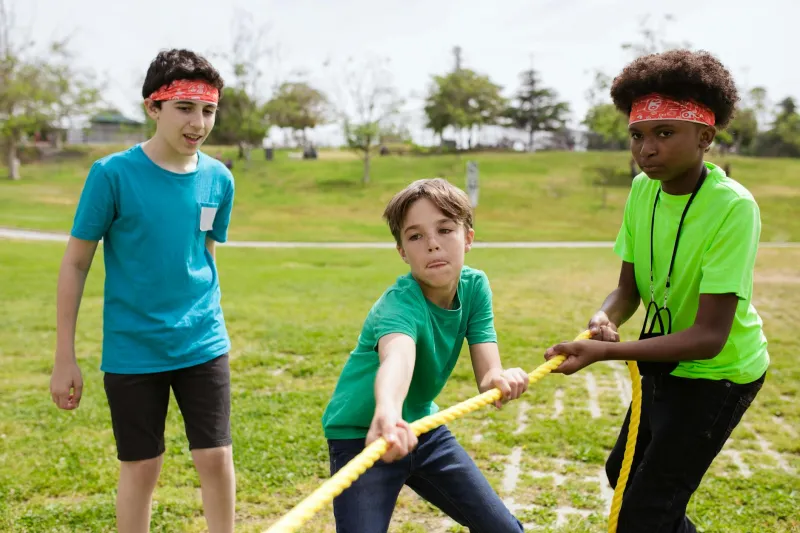
There's something primal about watching eight burly farmers dig their heels into freshly turned earth, muscles straining against a thick hemp rope that's seen more action than most professional sporting equipment. Every August, Gonerby YFC's annual tug-of-war transforms our quiet corner of Lincolnshire into a battleground where family pride, village honour, and generations of friendly rivalry collide in spectacular fashion.
What began forty-three years ago as a spontaneous challenge between neighbouring farms has blossomed into an event that draws spectators from across the county. The weathered rope, now in its third incarnation, has become as much a symbol of our community as the ancient oak that shades our clubhouse.
"My granddad started this whole thing with a bet over who had the strongest lads," recalls Sarah Mitchell, whose family has anchored Team Grantham End for three decades. "He reckoned his harvest crew could out-pull anyone in the district. Turned out he was half right – they could certainly try."
More Than Muscle: The Science of the Pull
Don't mistake this for mere brute force. Successful tug-of-war demands technique, timing, and tactical awareness that would impress any professional athlete. The teams that consistently triumph understand leverage, weight distribution, and the crucial importance of synchronised movement.
Local physiotherapist and former Gonerby YFC member Tom Hartwell explains the unexpected complexity: "These competitors are generating forces equivalent to lifting twice their body weight whilst maintaining perfect coordination. The cardiovascular demands rival those of a rugby match, but compressed into intense three-minute bursts."
The physical preparation extends well beyond the event itself. Many teams train throughout the summer, incorporating specific grip strengthening exercises and practising their stance on various terrain types. The anchor position – typically reserved for the heaviest team member – requires particular skill in distributing force whilst maintaining stability.
Generations in the Grip
Perhaps most remarkably, the competition has become a genuine multi-generational affair. Fathers who competed in the early years now watch their sons and daughters take their place on the rope, whilst grandparents share tactical wisdom passed down through decades of competition.
"It's one of the few sports where a sixty-year-old can still contribute meaningfully to a team," observes longtime participant and current club secretary David Thornton. "Experience counts for everything when you're trying to read the other team's strategy or know exactly when to coordinate that crucial surge."
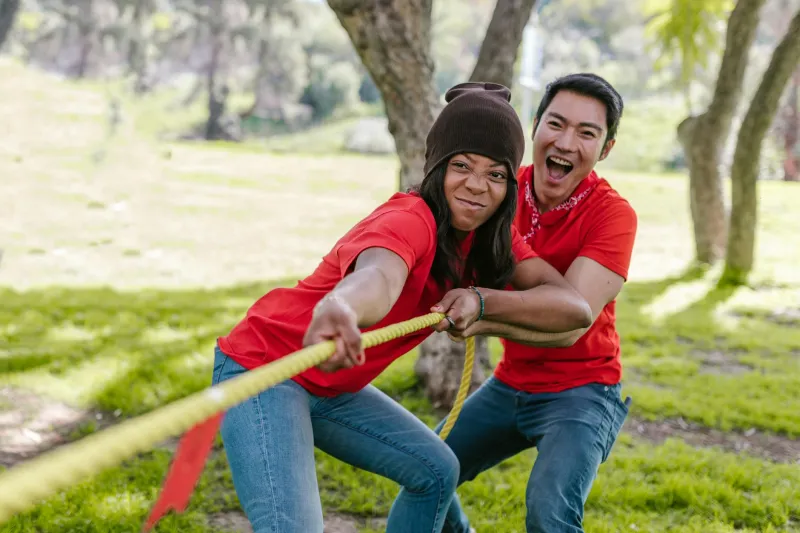
The event has also evolved to embrace changing demographics within rural communities. Recent years have seen mixed-gender teams, visiting university agricultural students, and even urban newcomers who've discovered the unique appeal of this distinctly rural challenge.
Tradition in Changing Times
In an era where many traditional rural activities struggle to maintain relevance, the tug-of-war's enduring popularity offers valuable insights into what makes community events truly sustainable. Unlike activities that require expensive equipment or specialised facilities, this competition strips sport down to its most fundamental elements: teamwork, determination, and the simple human desire to test oneself against worthy opponents.
The event's informal nature has proven surprisingly resilient. There are no official league tables, no qualifying rounds, and no prizes beyond bragging rights and a modest trophy that's been circulating since 1987. Success is measured in laughter shared, friendships forged, and stories that will be retold at harvest suppers for years to come.
The Wider Impact
Beyond its entertainment value, the annual competition serves crucial social functions within our rural community. It provides a focal point for families scattered across the district, creates opportunities for different generations to interact meaningfully, and maintains connections between farming families and the broader community.
For many young people, participating represents their first serious team sport experience. The lessons learned – about preparation, perseverance, and gracious competition – prove invaluable long after they've moved on to other pursuits.
"Some of our former competitors are now doctors, teachers, engineers," notes current club chairman Robert Hayes. "But they all remember what it felt like to be part of something bigger than themselves, pulling together with their mates towards a common goal."
Looking Forward
As we approach this year's competition, the familiar excitement builds throughout the district. New teams are forming, old rivalries are being rekindled, and that well-worn rope is being inspected for another season of service.
The beauty of Gonerby YFC's tug-of-war lies not in its simplicity, but in its ability to create profound connections through the simplest of challenges. In a world increasingly dominated by individual achievement and digital interaction, there's something deeply satisfying about eight people working in perfect harmony towards an utterly straightforward objective.
This August, as the rope grows taut and the crowd holds its breath, we'll once again witness the power of tradition to bring communities together. Whether you're gripping the rope or cheering from the sidelines, you're part of something that connects us to our agricultural heritage whilst building memories for future generations.
After all, some of the best traditions are rooted in the simplest ideas – and sometimes, all you need is a rope and the will to pull together.