Lincolnshire Lads and Lasses, Out in the World: The Exchanges That Brought Gonerby YFC Members Home Differently
Ryan had never been on a plane before he boarded a flight to Denmark with a group of Young Farmers from across Lincolnshire. He was seventeen. He grew up three miles from the farm his grandfather had worked. He thought he knew what farming looked like.
"I came back and I didn't stop talking for about three weeks," he says, laughing. "My mum eventually told me to sit down. But honestly, I couldn't. Everything looked different. My own farm looked different."
That's the Gonerby YFC international exchange programme in a nutshell — and it's a programme that tends to produce exactly that kind of reaction.
The Bigger Picture Behind the Passport Stamp
At its core, Young Farmers' international exchange isn't a holiday. It's not a school trip with better food. It's a structured immersion in how rural communities in other countries think about land, food, community, and the future of farming — and it's designed to put Lincolnshire teenagers into that environment without a safety net of familiarity.
Gonerby YFC has, over the years, sent members to countries including Germany, the Netherlands, Denmark, New Zealand, and Canada through the IFYE (International Farm Youth Exchange) programme and YFC's own twinning arrangements. These aren't passive sightseeing tours. Members stay with farming families, get their hands dirty, and are expected to contribute something back — knowledge, perspective, and a genuine willingness to engage.
"The whole point is that it's reciprocal," explains one club leader who has helped coordinate exchanges over the past decade. "You're not going as a tourist. You're going as a representative of rural Lincolnshire, and you're expected to hold your own. That's a lot to ask of a nineteen-year-old. That's exactly why it works."
What They Learn That You Can't Teach in a Classroom
Speak to any Gonerby member who's been through an international exchange and a few themes emerge quickly. The first is scale — or rather, the way scale reframes everything you thought you understood about efficiency, sustainability, and what's actually possible.
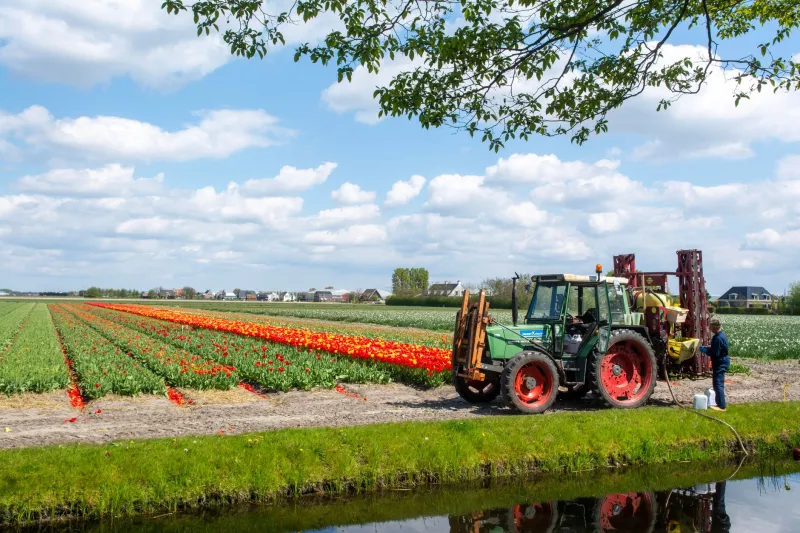
Jess, who travelled to the Netherlands as part of an exchange in her late teens, came back with a head full of ideas about precision agriculture and water management that she hadn't even known existed as concepts. "Dutch farmers are doing things with water that we haven't really caught up with yet," she says. "The infrastructure, the cooperation between farms — it's on a different level. I came home and started asking questions that nobody around here had really been asking. Some people found it annoying. Some people found it interesting. Both reactions felt useful."
The second theme is community — specifically, the way farming communities in other countries have structured their social and professional relationships. In parts of Germany and Scandinavia, farming cooperatives operate with a degree of trust and collective investment that can feel almost utopian to someone from a more individually-minded agricultural tradition. Seeing that in practice, rather than reading about it in a report, tends to leave a mark.
"I kept thinking, why don't we do it this way?" says Ryan. "And then I came home and started understanding more about why we don't — about history, about land ownership, about the way things evolved differently here. But the question felt important. It still does."
The Surprising Direction of Learning
One thing that catches first-time exchange participants off guard is how much the host families want to learn from them. The exchange genuinely runs both ways — and the realisation that you have something valuable to offer, that rural Lincolnshire has knowledge and tradition worth sharing, is often the most transformative moment of the whole experience.
"I taught a family in Denmark how to make a proper Lincolnshire stuffed chine," says former member Ellie, grinning. "They were absolutely fascinated. And I realised I'd never really thought about it as something special before. It just was what it was. Being away made me see it properly."
This is the quiet gift of the exchange programme that the brochures don't always capture — it teaches you to see home. The distance, the contrast, the fresh perspective of someone else's curiosity about where you're from: all of it works on you in ways that only become clear once you're back in a Lincolnshire field, looking at it with new eyes.
Coming Home Changed
The reintegration is its own process. Former exchange participants describe a period of adjustment — a restlessness, an impatience, a hunger to apply what they've seen. Some of them go on to introduce new ideas to their family farms. Some go into agri-business or policy work inspired by what they encountered abroad. Some simply carry a broader frame of reference through life.
Gonerby YFC has benefited from this in tangible ways. Members who've been on exchanges often return with energy and ideas that feed back into the club — new approaches to competitions, new topics for discussion evenings, new connections that occasionally develop into ongoing relationships between farming families across borders.
"We have a family in Germany that we've been in contact with for seven years now," says one Gonerby family whose son went on an exchange at eighteen. "They've visited us. We've visited them. It started with a two-week trip and turned into something we never expected."
Why It Matters More Than Ever
In a political and cultural moment when rural communities sometimes feel turned inward — when the pressures of farming life can make the world beyond the county boundary feel remote and irrelevant — Gonerby YFC's international programme is doing something quietly countercultural.
It's insisting that a teenager from a village near Grantham has something to offer the world, and that the world has something to offer back. It's building the kind of cross-cultural fluency that doesn't come from scrolling through social media, but from sitting at a kitchen table in another country and figuring out how to talk about soil.
Ryan is in his late twenties now. He farms. He's been back to Denmark once since that first trip. He's thinking about going again.
"I just think it makes you better," he says simply. "At farming. At talking to people. At being from somewhere and not being trapped by it. All of it."
That might be the best summary of what Gonerby YFC's international programme is actually for. Not the stamps in the passport. The size of the person who comes home.